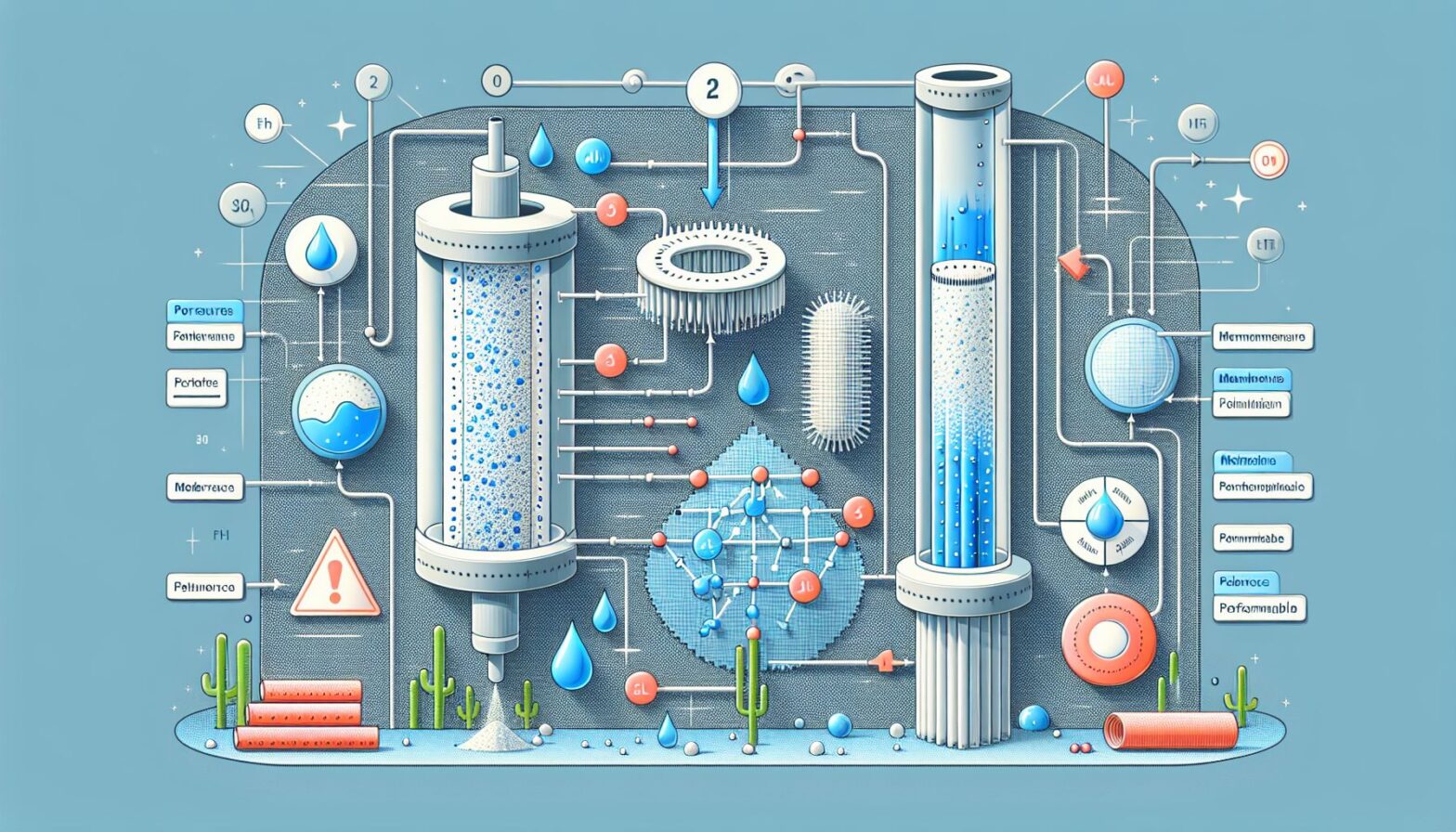
Membrane filtration media is at the heart of many industrial processes, such as water treatment, biopharmaceuticals production, and controlling industrial emissions. Indeed, the effectiveness of these crucial processes often hinges on the characteristics and performance of the membrane filtration media implemented. Yet, understanding these characteristics and their impact on membrane performance can be complex.
What is Membrane Filtration Media?
First off, let’s get on the same page: what do we mean by membrane filtration media? Simply put, it’s a selective barrier made from either organic or inorganic materials that allows certain substances to pass through while blocking others based on size, charge, or chemistry. The selection of which membrane to use, and hence which material to base it on, is determined by the desired filtration performance and the specific nature of the application it’s used in.
Key Characteristics of Membrane Filtration Media
Porosity
Arguably the most crucial characteristic of membrane filtration media is porosity, which is the ratio of the void (or pore) volume to the total volume of the membrane. This parameter determines the membrane’s capacity to transport substances. The higher the porosity, the greater the permeability, right? Well, it’s a bit more nuanced than that.
Still, pore size, too, plays an important role. As you would expect, smaller pore sizes allow for higher selectivity, filtering out smaller particles. However, smaller pores can also lead to higher pressure drops and lower flow rates, which might be a drawback in some applications.
Material and Structure
The material and structure of the membrane affect a range of factors, from its mechanical stability and chemical resistance to its fouling propensity and lifetime. For example, Polyethersulfone (PES) membranes are known for their excellent mechanical and thermal properties while being relatively resistant to fouling — a common problem in membrane filtration where filtered particles build up on the membrane surface, reducing its efficiency.
Chemical and Thermal Resistance
Closely related to the material is another crucial characteristic: chemical and thermal resistance. Certain membranes might have to withstand harsh chemical cleaning agents, while others might need to tolerate high operating temperatures. To choose an appropriate membrane for your situation, you’ll need to take both of these attributes into account.
Situated in this context, significant advancements have been achieved recently at MIT’s environmental engineering labs. A study emerged from MIT civil engineering research that presented a novel type of graphene oxide membrane with exceptional chemical and thermal resistance. Not only did these membranes show potential for high-performance filtration applications, but the research also contributed to a better understanding of the transport mechanisms in these materials. Gains like these clearly illustrate how continuous research can flexibly adapt filtration technology to remain adept at meeting changing industry demands.
Performance Metrics and Their Implications
Understanding the different performance metrics associated with membrane filtration media can help predict how well the membrane will perform in a given application. But remember, it’s not as simple as higher equals better; these metrics need to be understood in the context of your specific application’s needs.
Flux
The flux of a membrane defines the volume of substance that passes through the membrane per unit of surface area and time. It depends on the operating conditions as well as the membrane’s porosity and thickness. High flux can mean more efficient filtration, but it can also increase the risk of fouling, which can lead to decreased performance over time.
Rejection Rate
The rejection rate is the percentage of solute retained by the membrane. A higher rejection rate often means better purity in the filtrate. However, depending on the application, a 100% rejection rate may not always be necessary or even desirable. Therefore, understanding the necessary rejection rate for your application is crucial in selecting the right membrane.
Durability
A membrane’s life span is another critical performance metric. Over time, membranes can degrade due to physical wear, chemical degradation or fouling. Hence there is a trade-off between high flux and high rejection rates vs. the overall durability of the membrane.
Balancing Characteristics and Performance for Your Needs
There lies an intricate balance between these characteristics and performance metrics. It’s not just about cherry-picking the membrane with the highest porosity, highest flux, and highest resistance. Rather, it’s about understanding your specific needs: Is flux more important than selectivity? How resistant to high temperatures or harsh chemicals does the membrane need to be?
In conclusion, the performance of membrane filtration media is not a one-size-fits-all situation. The appropriate choice of membrane depends on a detailed understanding of application requirements, industry regulations, the membrane’s properties, and performance metrics.
Unlocking a future with purer, safer, and more efficient industrial processes rests on the shoulders of the humble membrane filter – and those who master its many characteristics and subtleties.