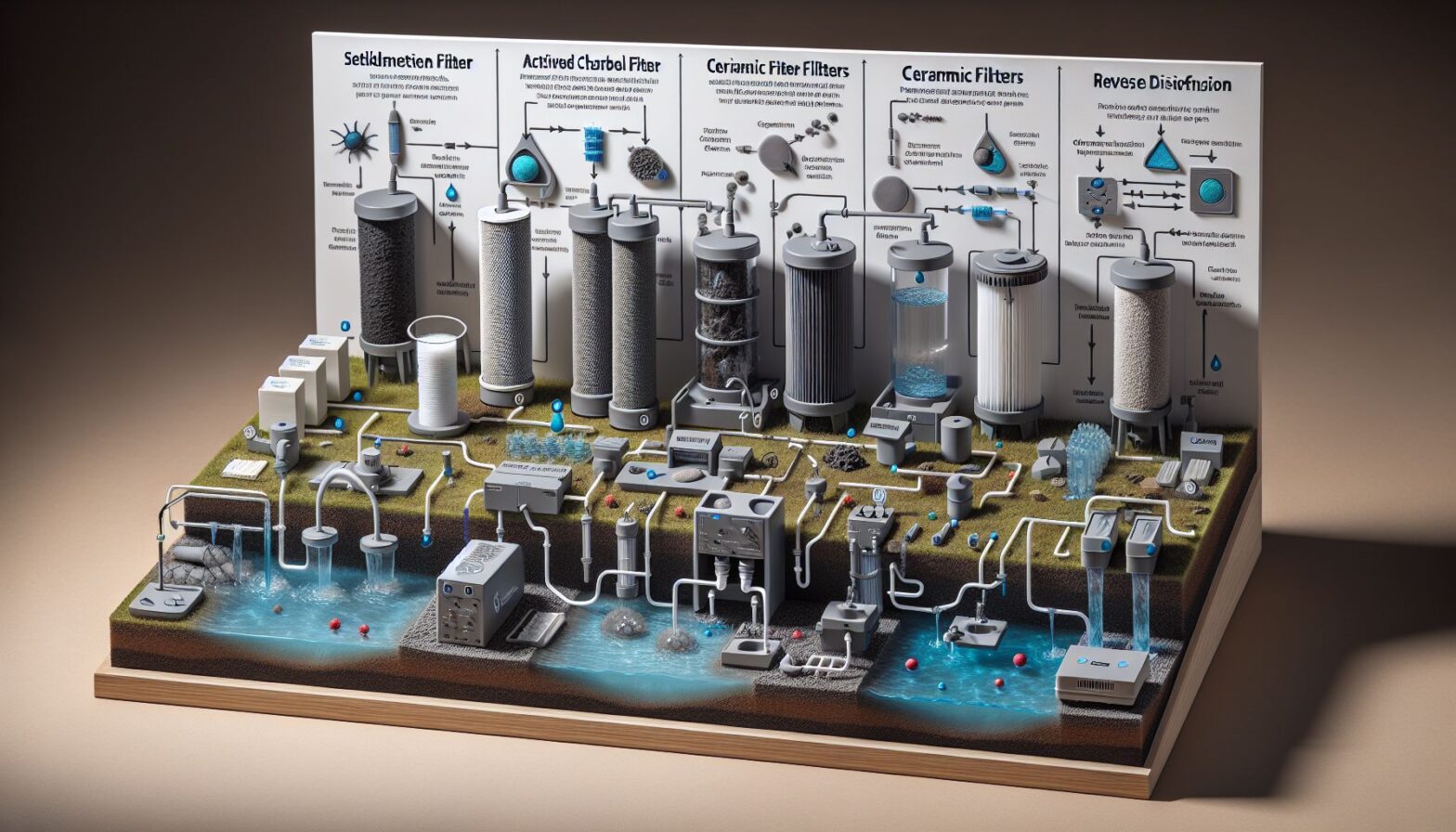
Water, the essence of life, is unfortunately a carrier for health-threatening pathogens that can cause dreadful diseases. Therefore, water treatment technology is a vital field that focuses on preserving the health of individuals worldwide. This article delves into the technological advancements in the point-of-use water treatment sector, focusing on how these technologies aid in pathogen removal.
Decoding Point-of-Use Water Treatment
Point-of-use water treatment (POUWT) systems provide an efficient solution for managing water quality in households. As the name suggests, POUWT focuses on treating water at the place of distribution, i.e., at the eccentric outlets in homes.
The World Health Organization (WHO) promotes the use of POUWT and certifies its effectiveness in reducing waterborne illnesses. These systems are typically installed on a single tap and enhance the quality of water at the point of consumption. According to a systematic review and meta-analysis published in Environmental Science & Technology, POUWT can reduce diarrheal diseases by an average of 47%. Impressive, isn’t it?
Additionally, POUWT systems are versatile. They can filter drinking water, enhance the quality of bath water, and improve the overall quality of water used for different purposes at homes, workplaces, and public facilities.
Technologies Involved in Point-Of-Use Water Treatment
The science behind these systems is as intriguing as the results they deliver. Various technologies are used in POUWT to eliminate harmful pathogens and improve water quality. Let’s take a deep dive into each of them.
Filtration
Filtration is a simple yet effective way of removing bacteria, parasites, and sediments from water. This method involves passing the water through a microfiltration or ultrafiltration membrane to eliminate pathogens. The choice of the membrane depends on the size of the contaminants, which can vary from 0.1 to 10 micrometers.
Microfiltration can effectively filter out most bacteria and parasites. On the other hand, ultrafiltration with smaller pores can also remove viruses. As per the CDC water treatment guidance, filtration is an effective means of treating water at its point of use.
Disinfection
Disinfection is another prevalent method used in POUWT systems. It primarily targets more minuscule pathogens, such as viruses, which typically cannot be filtered out.
Modern POUWT systems leverage processes like chlorination and ultraviolet (UV) treatment for disinfection. Chlorination inactivates pathogens by creating a toxic environment for them, while UV treatment disinfects by damaging the DNA of the pathogens, rendering them incapable of reproducing.
Adsorption
Adsorption is a process that involves the use of activated carbon filters, which attract and hold certain impurities on their surface. This method is primarily used to remove organic compounds and residual disinfectants from water.
Surprisingly, activated carbon can also eliminate certain pathogenic bacteria. In a study led by the University of Arizona, researchers found that activated carbon filters could inhibit Escherichia coli and Pseudomonas aeruginosa, two common pathogens found in untreated water.
Efficiencies of Different Pathogen Removal Technologies
All technologies have varied efficiencies when it comes to the removal of different types of pathogens. For instance, filtration cannot eliminate viruses effectively due to their minuscule size. On the other hand, disinfection cannot filter out larger organisms like cysts and oocysts.
The success of the POUWT system depends greatly on the combination and implementation of different technologies to achieve a complete removal or reduction of pathogens. That’s why many modern POUWT systems incorporate multi-barrier techniques, combining filtration, disinfection, and adsorption in one system.
The Future of Point-Of-Use Water Treatment
Like any technology, POUWT is also bounding forward. The future forecasts an increasing adoption of smart technologies, IoT-enabled devices, and advanced materials in the design and optimization of these systems.
Another area that promises to grow is eco-friendly and energy-efficient POUWT solutions. After all, water treatment is an integral part of our sustainable future!
In conclusion, point-of-use water treatment technologies play a significant role in mitigating the health risks related to waterborne pathogens. Be it filtration, disinfection or adsorption, each technology has its unique role in pathogen removal and building a world where clean, safe water is accessible to all.